Wird das Büro zum Hotel? Was diese Woche offenblieb

Liebe Kundinnen und Kunden, liebe Freunde von GALA Design,
diese Woche diskutiert die Design-Welt an zwei Orten dieselbe Frage. In Chicago schloss die NeoCon mit einer klaren Ansage: Das Büro soll sich anfühlen wie ein Hotel, ein Restaurant, ein Club — sonst kommt niemand mehr. In Kopenhagen läuft zur selben Stunde 3 Days of Design, wo Stellar Works und Space Copenhagen die Zukunft der Hospitality neu vermessen. Zwei Messen, ein Streit: Was bedeutet Hospitality im Raum wirklich — und was passiert, wenn das Büro sie nur kopiert?
Die Debatte. Der Begriff der Woche heisst Workspitality — die Verschmelzung von Workplace und Hospitality. Die Argumentation: Solange Unternehmen die Rückkehr ins Büro anordnen, muss der Raum einen Grund liefern, der über die Anordnung hinausreicht. Lounges, Kaffeebars, hochwertige Materialien, ein Empfang wie in einem Boutique-Hotel. Manche gehen weiter und erklären die Hospitality-Erfahrung gleich zum neuen Betriebssystem des Arbeitsplatzes. Dagegen steht eine leise, aber wachsende Gegenstimme: Dezeen prognostiziert für 2026 kuratierte Ruhe statt oberflächlicher Opulenz. Die Spannung ist real. Wird der Raum tiefer — oder bekommt die Rückkehrpflicht nur eine teurere Oberfläche?
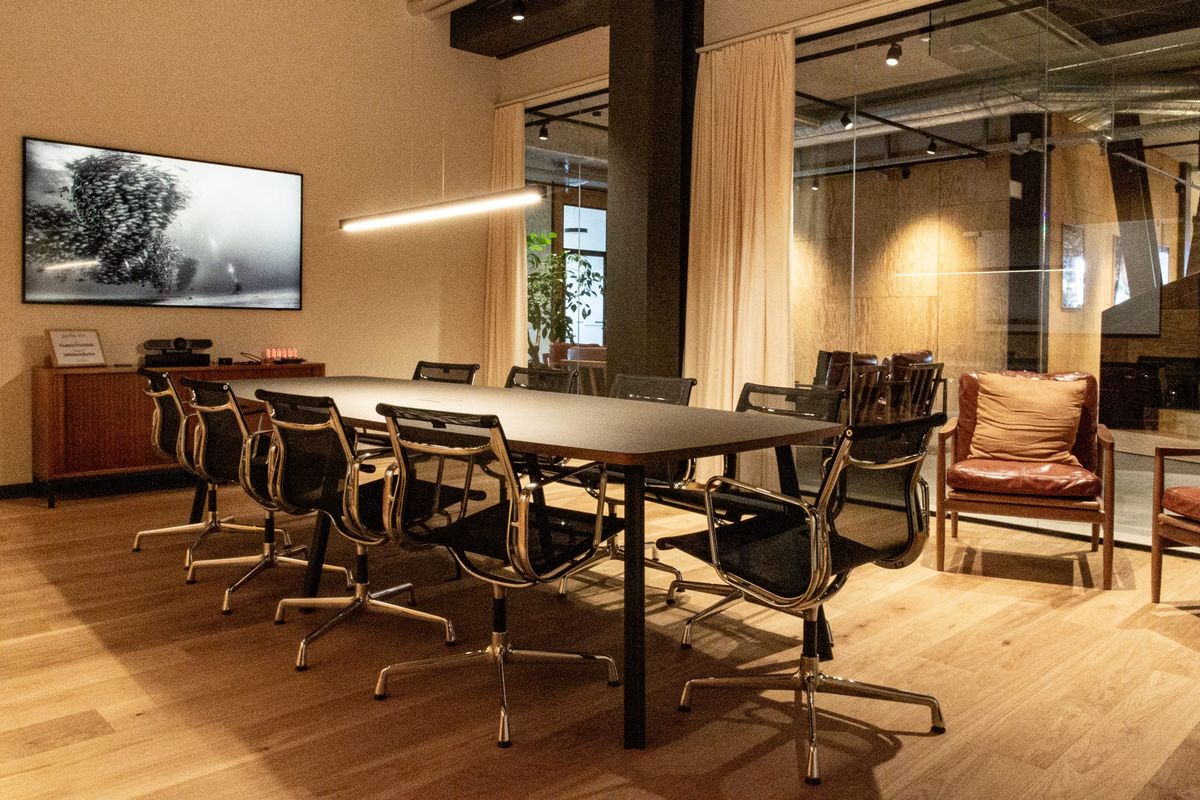
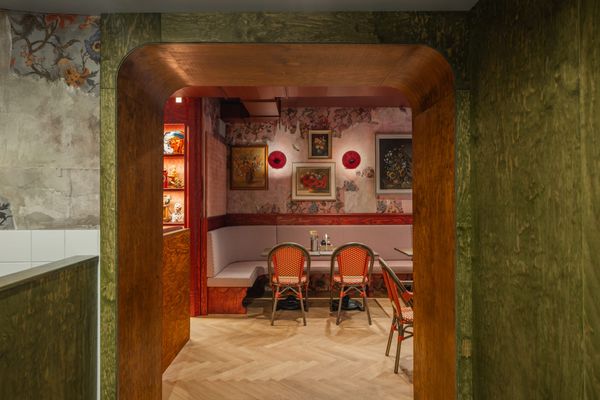
Unsere Sicht. Wir gestalten beide Welten, Workplace und Hospitality, und genau deshalb sind wir vorsichtig mit dem Wort. Eine Espresso-Bar macht aus einem Büro noch kein gastliches Haus. Hospitality ist keine Oberfläche, sie ist eine Choreografie: die Ankunft, die Akustik, der Übergang von laut zu leise, Material, das Gewicht trägt und mit den Jahren besser wird. Bei Westhive in Zürich haben wir uns für amerikanischen Nussbaum statt Eiche entschieden. Das war keine Geschmacksfrage. Eiche wirkte im Tageslicht dieses Raums zu hell, zu skandinavisch, und nahm der Architektur die Tiefe. Nussbaum gibt dem Arbeitsort Gewicht, ohne ihn schwer zu machen. So übersetzen wir Hospitality in den Workplace — nicht als Dekor, sondern als Antwort auf Licht, Proportion und Marke. Wer bei Negishi gesehen hat, wie ein echter Gastraum funktioniert, kennt das Prinzip: Er trägt nicht, weil er warm aussieht, sondern weil jeder Übergang gebaut ist.
Ein Gedanke zum Mitnehmen. Die Frage ist also nicht: Wie machen wir das Büro gemütlicher? Sie lautet: Was kann dieser Raum, das ein Laptop am Küchentisch nicht kann? Wer darauf eine präzise Antwort hat, muss keine Hotel-Lobby imitieren.
Was wir diese Woche gelesen haben.
- NeoCon will den Arbeitsplatz neu erfinden — Architect Magazine
- Wie Hospitality die Workplace-Gestaltung verändert — officeinsight
- Die Hospitality-Erfahrung ist der neue Workplace — Spector Group
- Interior 2026: kuratierte Ruhe statt oberflächlicher Opulenz — Dezeen
- 3 Days of Design 2026 — 3daysofdesign.dk
Denken Sie über einen Arbeits-, Gast- oder Verkaufsraum nach, der mehr trägt als seine Oberfläche? Sprechen Sie mit uns über Ihr Projekt.
Mit freundlichen Grüssen
Ihr Team von GALA Design
English version
Dear clients and friends of GALA Design,
this week the design world is asking the same question in two cities. In Chicago, NeoCon closed with a clear message: the office should feel like a hotel, a restaurant, a club — or no one will come back. In Copenhagen, at the very same hour, 3 Days of Design is under way, where Stellar Works and Space Copenhagen are re-measuring the future of hospitality. Two fairs, one argument: what does hospitality in a space actually mean — and what happens when the office merely copies it?
The debate. The word of the week is workspitality — the merging of workplace and hospitality. The case runs like this: as long as companies mandate the return to the office, the space has to offer a reason that outlasts the mandate. Lounges, coffee bars, high-grade materials, a reception like a boutique hotel. Some go further and declare the hospitality experience the new operating system of work. Against this stands a quiet but growing counter-voice: for 2026, Dezeen forecasts curated calm over superficial opulence. The tension is real. Does the space gain depth — or does the return-to-office mandate simply get a more expensive surface?
Our view. We design both worlds, workplace and hospitality, and that is precisely why we are careful with the word. An espresso bar does not turn an office into a hospitable house. Hospitality is not a surface; it is a choreography: the arrival, the acoustics, the shift from loud to quiet, material that carries weight and improves with the years. At Westhive in Zurich we chose American walnut over oak. That was not a matter of taste. In the daylight of that space, oak read too light, too Scandinavian, and took depth away from the architecture. Walnut gives the workplace weight without making it heavy. That is how we translate hospitality into the workplace — not as décor, but as an answer to light, proportion and brand. Anyone who has seen how a real dining room works at Negishi knows the principle: it holds not because it looks warm, but because every transition is built.
One thought to take with you. So the question is not: how do we make the office cosier? It is: what can this space do that a laptop at the kitchen table cannot? Those who can answer that precisely have no need to imitate a hotel lobby.
What we read this week.
- NeoCon wants to reinvent the workplace — Architect Magazine
- How hospitality is transforming workplace design — officeinsight
- The hospitality experience is the new workplace — Spector Group
- Interiors 2026: curated calm over superficial opulence — Dezeen
- 3 Days of Design 2026 — 3daysofdesign.dk
Are you thinking about a workplace, a dining room or a store that carries more than its surface? Talk to us about your project.
Kind regards,
Your GALA Design team
Das Team hinter diesem Newsletter