Was, wenn Hotels zuerst für Einheimische gestaltet würden?

Teilen
Was, wenn Hotels zuerst für Einheimische gestaltet würden?

Hotel La Senda, Zuoz, conceptualized by GALA Design

Über eine Gastlichkeit, die zu ihrer Umgebung gehört – und was das daran ändert, wie wir sie entwerfen.

Jahrzehntelang wurden Hotels rund um den Gast gedacht. Die Lobby empfängt ihn. Das Restaurant bedient ihn. Die Bar wartet auf ihn. Jedes Detail ist darauf abgestimmt, einen Aufenthalt zu schaffen, der in Erinnerung bleibt.

Doch was passiert, wenn wir die Frage umdrehen? Was, wenn Hotels zuerst für Einheimische gestaltet würden? Nicht, um den Gast auszuschließen, sondern um Orte zu schaffen, die wirklich zu ihrer Umgebung gehören.
Ein Hotel sollte mehr sein als ein Ort zum Schlafen

Die stärksten Hotels wirken nicht wie isolierte Inseln. Sie fühlen sich verbunden an – mit der Stadt, dem Viertel, der Landschaft oder der Kultur um sie herum. Ihre Restaurants haben Stammgäste. In ihren Bars sieht man bekannte Gesichter. Ihre Lobby wird zum Treffpunkt. Ihre Räume haben ein Leben, das weitergeht, ob gerade ein Gast eincheckt oder nicht.

Das verändert die Rolle des Hotels. Es ist nicht länger bloß eine Dienstleistung für Reisende. Es wird Teil des lokalen Ökosystems. Und das kann grundlegend verändern, wie wir es entwerfen.

Die Nachbarschaft mitdenken, nicht aussperren

Zu oft werden Hotels als in sich geschlossene Welten geplant. Sobald man eintritt, verschwindet das Draußen. Die interessantesten Hospitality-Projekte von heute scheinen genau das Gegenteil zu tun. Sie borgen sich etwas von ihrem Kontext – nicht über naheliegende Klischees oder dekorative Zitate, sondern über Atmosphäre, Material, Küche, Handwerk, Menschen und alltägliche Rituale.

Ein Hotel in den Bergen muss nicht einfach alpin aussehen. Ein Hotel in der Stadt muss nicht einfach urban aussehen.

Die Frage ist: Was bedeutet dieser Ort für die Menschen, die hier schon leben? Genau dort wird Gestaltung interessant.

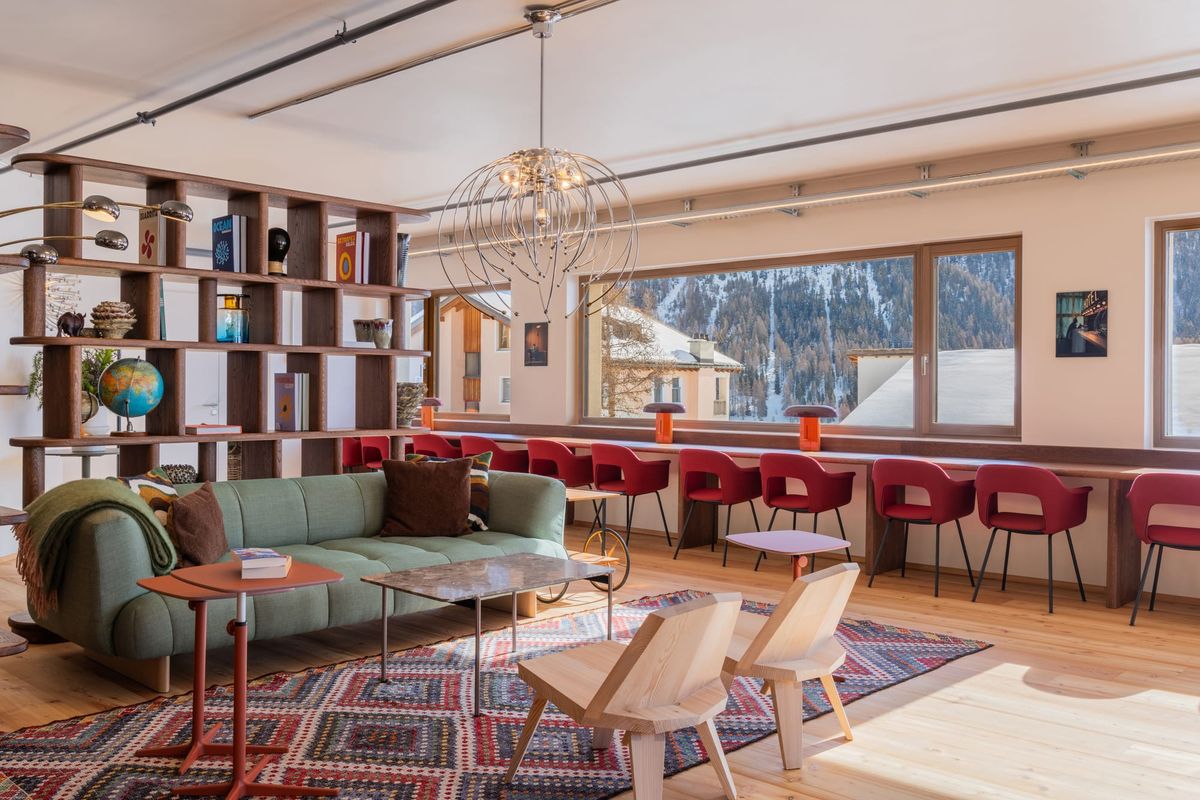
Hotel La Senda, Zuoz, conceptualized by GALA Design

Authentizität entsteht durch Einheimische

Es gibt etwas in der Hospitality, das sich kaum herstellen lässt: ein Gefühl von Leben. Eine perfekt gestaltete Lobby kann leer bleiben. Ein schönes Restaurant kann eigenartig anonym wirken. Aber sobald Menschen dazukommen, die tatsächlich in der Nähe wohnen, verändert sich der Raum.

Jemand, der hier jeden Morgen seinen Kaffee trinkt. Jemand, der sich nach der Arbeit an der Bar mit Freunden trifft. Eine Familie aus der Nachbarschaft, die sonntags zum Essen kommt. Ein Stammgast, der wiederkommt, weil der Barkeeper seinen Namen kennt.

Diese Menschen geben einem Hotel etwas, das kein Designbudget kaufen kann: einen Grund zu existieren, der über seine Gäste hinausreicht.

Und die Gäste profitieren ebenfalls

Ironischerweise entsteht gerade dadurch auch das bessere Erlebnis für Besucher. Reisende wollen immer stärker das Gefühl haben, etwas entdeckt zu haben, statt etwas nur konsumiert zu haben. Sie wollen nicht zwangsläufig noch ein Restaurant, das überall auf der Welt stehen könnte. Sie wollen den Ort, an den die Leute aus dem Viertel wirklich gehen. Sie wollen wissen, wie eine Stadt schmeckt, klingt und sich anfühlt – an einem gewöhnlichen Dienstag.

Die Einheimischen werden zu Insidern. Das Hotel wird zum Zugang.

Zuoz

Von der Destination zur Gemeinschaft

Das heißt nicht, dass jedes Hotel ein Gemeinschaftszentrum werden muss. Es heißt, das Verhältnis zwischen Gastlichkeit und Umgebung neu zu denken.

Vielleicht sollte das Restaurant einen eigenen Eingang von der Straße haben. Vielleicht sollte die Bar sichtbar und zugänglich sein, ohne Umweg über die Rezeption. Vielleicht sollte die Lobby kein Wartezimmer sein, sondern ein Ort, an dem man sich gerne aufhält. Vielleicht können Programm, Küche, Retail und Veranstaltungen das Hotel mit den Menschen ringsum verbinden.

Und vielleicht ist die wichtigste Entscheidung nicht, was wir in das Hotel hineinstellen, sondern wie wir es nach außen öffnen.

Die Frage, die wir stellen sollten

Die Zukunft der Hospitality liegt vielleicht nicht darin, immer spektakulärere Destinationen zu schaffen. Vielleicht liegt sie darin, Orte zu schaffen, die sich notwendig anfühlen. Orte, die Einheimische wählen, auch ohne besonderen Anlass. Orte, die Besucher entdecken, weil Einheimische sie längst lieben. Orte, die ihren Standort nicht bloß abbilden, sondern an ihm teilhaben.

Denn das beste Hotel ist vielleicht nicht das, in dem man sich wie ein Besucher fühlt. Sondern das, in dem man sich zugehörig fühlt.

IM GESPRÄCH

Dieser Gedanke entsteht nicht im Vakuum. In der Hospitality-Branche wird zunehmend darüber diskutiert, wie Hotels stärker mit ihren Communities und ihrem lokalen Kontext verbunden werden können.

Hyper-localisation is the future of hotel design International Traveller · März 2026 Darüber, wie Hotels immer mehr Teil jener Umgebung werden, in der sie stehen: mit lokaler Kultur und einer Einladung an Besucher und Einheimische gleichermaßen.

Further Forecast 2025: Community Capital Design Hotels Über den Aufstieg von Mikro-Communities und den wachsenden Wunsch nach tieferer Verbindung im Reisen – und darüber, wie Gastlichkeit zum Ankerpunkt für soziale Begegnung werden kann statt nur ein Ort zum Übernachten zu sein.

Travelers Are Seeking Community: Here's How to Build It Design Hotels · Februar 2025 Zeigt eine bemerkenswerte Lücke auf: 84 % halten Hotels für fähig, ein Gefühl von Gemeinschaft zu schaffen – aber nur 24 % fühlen sich einer solchen Gemeinschaft tatsächlich zugehörig.

The Social Hub: Hotels and Community, Exploring Strategies SAGE Journals · Juni 2025 Eine wissenschaftliche Fallstudie darüber, wie Hotels lokales Engagement fördern und gemeinsam mit Akteuren vor Ort Wert schaffen können.

Top 10 Luxury Hospitality Design Trends for 2026 Hotel Yearbook · Januar 2026 Zu den identifizierten Trends gehört die Integration von Gastlichkeit in gemischt genutzte städtische Kontexte – mit Hotels als aktiven Teilnehmern am Leben einer Stadt statt als isolierten Destinationen.


UNSERE SICHT

Die interessante Frage ist nicht, ob Hotels lokaler werden sollten. Sie lautet: Was passiert, wenn das Lokale Teil des Geschäftsmodells wird und nicht nur Teil der Designgeschichte?

Genau dort wird aus unserer Sicht die nächste Generation der Hospitality interessant.

Bis zur nächsten Ausgabe. Und zur nächsten Frage.


EN

What if hotels were designed for locals first?

On hospitality that belongs to its surroundings, and what that changes about how we design it.

For decades, hotels have been designed around the guest. The lobby welcomes you. The restaurant serves you. The bar waits for you. Every detail is carefully orchestrated to create a memorable stay. But what happens when we turn the question around? What if hotels were designed for locals first? Not to exclude the guest, but to create places that genuinely belong to their surroundings.

A hotel should be more than a place to sleep

The strongest hotels don’t feel like isolated islands. They feel connected to the city, the neighbourhood, the landscape or the culture around them. Their restaurants have regulars. Their bars have familiar faces. Their lobby becomes a meeting point. Their spaces have a life that continues whether or not a guest is checking in. This changes the role of the hotel. It is no longer simply a service for travellers. It becomes part of the local ecosystem. And that can fundamentally change how we design it.

Design the neighbourhood in, not out

Too often, hotels are designed as self-contained worlds. Once you enter, the outside disappears. But today’s most interesting hospitality spaces seem to be doing the opposite. They borrow from their context, not through obvious clichés or decorative references, but through atmosphere, materials, food, craftsmanship, people and everyday rituals. A hotel in the mountains should not simply look alpine. A hotel in a city should not simply look urban. The question is: what does this place mean to the people who already live here? That is where the design becomes more interesting.

Hotel La Senda, Zuoz, conceptualized by GALA Design

Locals create authenticity

There is something difficult to manufacture in hospitality: a sense of life. A perfectly designed lobby can remain empty. A beautiful restaurant can feel strangely anonymous. But introduce people who actually live nearby, and the space changes. A local having coffee every morning. Someone meeting friends at the bar after work. A neighbourhood family having dinner on a Sunday. A regular returning because the bartender knows their name. These people give a hotel something no design budget can buy: a reason to exist beyond its guests.

And guests benefit too

Ironically, designing for locals may create a better experience for visitors. Travellers increasingly want to feel that they have discovered something rather than simply consumed something. They don’t necessarily want another restaurant that could be anywhere in the world. They want the place where people from the neighbourhood actually go. They want to know what the city tastes like, sounds like and feels like on an ordinary Tuesday. The local becomes the insider. The hotel becomes the gateway.

Zuoz

From destination to community

This doesn’t mean every hotel needs to become a community centre. It means reconsidering the relationship between hospitality and its surroundings. Maybe the restaurant should have its own entrance from the street. Maybe the bar should be visible and accessible without walking through reception. Maybe the lobby shouldn’t be a waiting room, but a place people genuinely want to spend time. Maybe programming, food, retail and events can connect the hotel to the people around it. And maybe the most important design decision isn’t what we put inside the hotel, but how we open it up to what is outside.

The question we should be asking

The future of hospitality may not be about creating increasingly spectacular destinations. It may be about creating places that feel necessary. Places that locals choose even when they have nowhere else to be. Places that visitors discover because locals already love them. Places that don’t simply represent their location, but participate in it.

Because perhaps the best hotel isn’t the one that makes you feel like a visitor. It’s the one that makes you feel like you belong.

In the conversation

This idea isn’t happening in isolation. Across hospitality there is a growing conversation about hotels becoming more connected to their communities and local context.

Hyper-localisation is the future of hotel design International Traveller · March 2026 How hotels are increasingly becoming part of the environments they sit within, embracing local culture and inviting both visitors and locals into the experience.

Further Forecast 2025: Community Capital Design Hotels On the rise of micro-communities and the growing desire for deeper connections in travel, suggesting hospitality can become an anchor for social interaction rather than simply a place to stay.

Travelers Are Seeking Community: Here’s How to Build It Design Hotels · February 2025 Identifies an interesting gap: while 84% of people believe hotels have the potential to create a sense of community, only 24% feel they actually belong to one.

The Social Hub: Hotels and Community, Exploring Strategies SAGE Journals · June 2025 An academic case study on how hotels can foster community engagement and create value together with local stakeholders.

Top 10 Luxury Hospitality Design Trends for 2026 Hotel Yearbook · January 2026 Among the trends identified is the integration of hospitality into mixed-use urban contexts, with hotels acting as active participants in the life of a city rather than isolated destinations.


OUR TAKE

The interesting question isn’t whether hotels should become more local. It is what happens when being local becomes part of the business model rather than part of the design story. That is where we think the next generation of hospitality gets interesting.

Until the next issue. And the next question.