Darf ein Raum altern?

Teilen
Darf ein Raum altern?

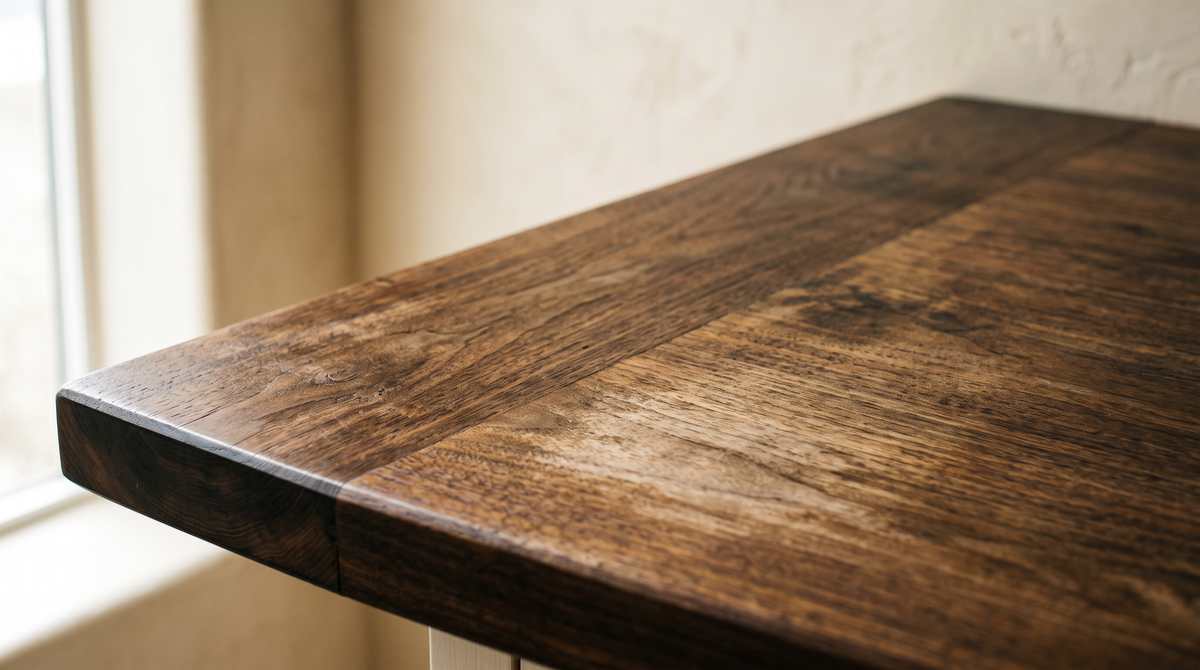
Oberfläche nach Jahren im Gebrauch (Illustration)

Die meisten Briefings sagen noch immer Nein. Versiegelte Oberflächen, austauschbare Paneele, Materialien, die danach ausgewählt werden, wie sie am Eröffnungstag aussehen. Dieses Jahr beginnt sich die Antwort zu verschieben, und es geht dabei längst nicht mehr um Geschmack - sondern darum, wie lange ein Raum bestehen soll.

Die Debatte.

Vor zehn Tagen hat We-Heart beschrieben, wie sich Coworking-Flächen zunehmend an privaten Galerien orientieren: Jedes Material muss seinen Platz rechtfertigen, leere Fläche gilt als Gestaltungsmittel, und bevorzugt werden Materialien, die über die Jahre Charakter entwickeln, statt am ersten Tag makellos zu wirken. Genannt werden Massivholz, Naturstein, gebürstete Metalle, Leinen, Kalkputz.

Wie das aussieht, zeigt eine Londoner Bar, die Dezeen im Juni vorgestellt hat: Wände und Böden vollständig mit Samt bezogen, bewusst so gewählt, dass der Stoff die Abdrücke der Gäste behält. Was vor wenigen Jahren als Mangel gegolten hätte, ist hier das gestalterische Argument.

Zu Jahresbeginn klang das bei den von Dezeen befragten Studios noch wie eine Prognose. Keine Rückkehr zum kühlen Minimalismus, sondern eine kuratierte Ruhe, der oberflächlichen Opulenz vorgezogen, so formulierte es der Hongkonger Architekt Andre Fu. Claire Sá von De Rosee Sa riet dazu, Materialien möglichst unbehandelt zu lassen und ihre Patina zu zeigen statt sie zu kaschieren. Ein halbes Jahr später ist daraus gebaute Realität geworden.

Unsere Sicht.

An einem Punkt widersprechen wir. Materialien entwickeln sich nicht von allein zum Guten. "Natürlich altern lassen" ist als Haltung richtig und als Anweisung unbrauchbar.

Bei Westhive haben wir amerikanischen Nussbaum statt Eiche eingesetzt - ein Holz, das nachdunkelt und die Spuren derer aufnimmt, die es benutzen. Das war keine Entscheidung für ein Material, sondern für einen Verlauf: dafür, wie die Fläche in fünf Jahren aussehen soll, und für die Detailausbildung, die nötig ist, damit sie dort ankommt.

Denn Patina wird gestaltet, nicht dem Zufall überlassen. Struktur ist das, was Patina von Schaden trennt, von der Materialwahl über die Kantenausbildung bis zur letzten Montage. Ein Store, ein Restaurant, ein Arbeitsplatz, der altern darf, sagt seinen Gästen etwas, das kein Hochglanz sagen kann: hier wird Zeit genommen, hier soll etwas bleiben. Aber nur, wenn jemand diesen Verlauf vorher durchdacht hat.

Ein Gedanke zum Mitnehmen.

Ein Raum, der seine Spuren zeigen darf, wird nicht alt. Er wird sich selbst ähnlicher.

Was wir diese Woche gelesen haben.

Wenn Sie einen Raum planen, der sich auch in zehn Jahren noch richtig anfühlen soll, sprechen wir über Materialien, die reifen statt zu ermüden.

Mit freundlichen Grüssen

Ihr Team von GALA Design


Is a space allowed to age?

Most briefs still say no. Sealed surfaces, replaceable panels, materials selected for how they photograph in week one. This year the answer is starting to shift, and the argument is no longer about taste - it is about how long a space is expected to last.

The debate.

Ten days ago, We-Heart described how co-working interiors are increasingly borrowing from the private gallery: every material has to justify its place, empty space counts as a design element, and the preference runs to materials that develop character over time rather than looking pristine on day one. Solid timber, natural stone, brushed metals, linen and textured plaster were among those named.

What that looks like built is a London bar Dezeen published in June, with velvet on every wall and floor, specified precisely because it holds the impressions of the people who sit on it. What would have counted as a defect a few years ago is here the design argument.

At the start of the year, among the studios Dezeen surveyed, this was still a forecast. Not a return to cold minimalism, but what Hong Kong architect Andre Fu described as "curated calm over superficial opulence". Claire Sá of De Rosee Sa advised leaving materials as untreated as possible and letting patina show rather than concealing it. Six months on, it is built.

Our view.

On one point we disagree. Materials do not improve on their own. "Let them age naturally" is sound as a position and useless as an instruction.

At Westhive we specified American walnut instead of oak - a wood that darkens and takes on the traces of the people who use it. That was not a decision about a material but about a trajectory: how the surface should look in five years, and what detailing is required for it to arrive there.

Patina is designed, not left to chance. Structure is what separates patina from damage, from the choice of material through the edge detailing to the final installation. A store, a restaurant, a workplace that is allowed to age tells its guests something no amount of gloss can: here, time is taken; here, something is meant to stay. But only if someone thought the trajectory through beforehand.

A thought to take with you.

A space that is allowed to show its traces does not grow old. It grows more like itself.

What we read this week.

If you are planning a space that should still feel right in ten years, let us talk about materials that mature rather than tire.

Kind regards,

Your GALA Design team


Das Team hinter diesem Newsletter